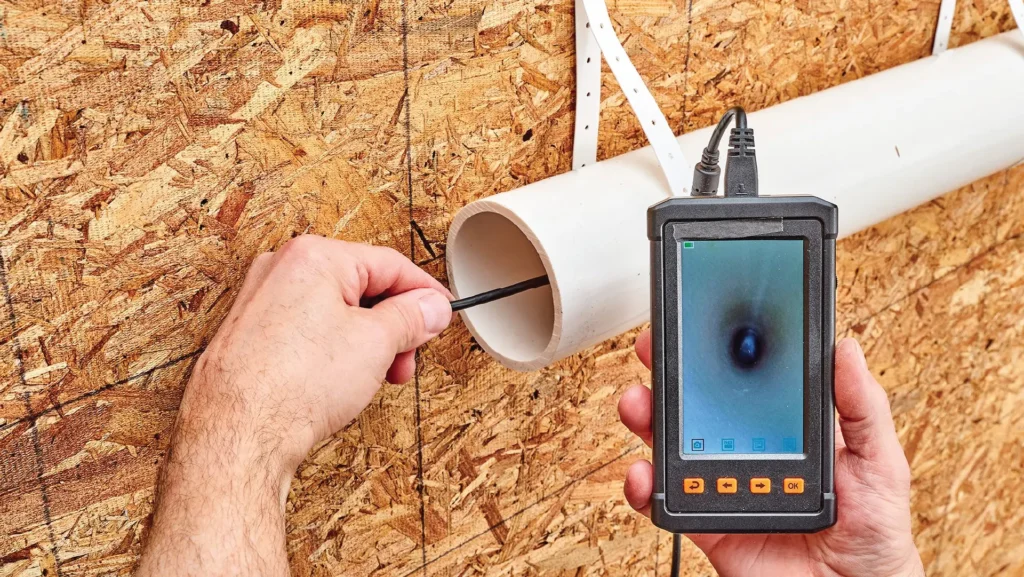
When a drainage problem keeps returning, a closer look inside the line can help explain what is happening. J Roberts Plumbing provides drain camera inspection and locating in Auburn, AL, and nearby communities to investigate concerns about drain-line condition.
Contact Jeremy to discuss the affected fixtures, previous clearing or repairs, and any findings already available. We can discuss whether an inspection is suitable and what the appointment will involve.
Call 334-734-7654
Monday–Friday, 7:00 AM–7:00 PM
A camera inspection may be useful when a drainage problem remains unexplained or more information about the pipe is needed.
Reasons to discuss an inspection include:
These signs do not automatically mean a pipe is broken. Tell Jeremy what has happened and what work has already been completed. Previous inspection findings can help establish what still needs checking.
Camera inspection examines the inside of a drain line. Locating identifies the position of a relevant inspection point at the property. Together, they can provide information for deciding where further attention is needed.
A drain camera provides a view of the sections it can reach. The inspection can help assess visible pipe conditions and investigate the area related to a reported problem.
What the camera shows needs to be considered alongside the symptoms and the extent of the inspection. A clear view of one section does not establish the condition of the entire system.
Locating equipment helps identify the position of an inspection point that needs attention. This can support planning when further examination or access is recommended.
When arranging service, explain what you need located and ask how the findings will be provided. Inspection and locating gather information; exposing or repairing the pipe is separate work.
Access and conditions inside the line affect what can be inspected. Obstructions may limit camera passage, while poor visibility can prevent a clear assessment of the pipe surface.
If the area of concern cannot be reached or viewed adequately, further work may be needed before a conclusion can be reached. The findings should distinguish what was observed from anything that remains uncertain.
We begin with the property location, affected fixtures, and history of the issue. Tell us about previous blockages, clearing, repairs, and any findings already provided.
Mention access restrictions and identify the person who can arrange entry to the relevant areas.
We review available access and whether camera inspection is suitable for the concern. This establishes where the inspection can begin and any constraints affecting the work.
We examine the areas the camera can reach and view, looking for information relevant to the reported problem.
We use locating equipment to help identify the position of the relevant inspection point, where conditions allow.
We explain what the inspection showed, any areas we could not assess, and the recommended next step. If further work is proposed, we discuss what it involves before extending the agreed service.
Cost depends on the work required to investigate the concern.
Factors can include:
When arranging the appointment, confirm whether inspection and locating are included together and what the proposed price covers. Drain clearing, physical access, and pipe repair should not be assumed to be included.
Following a tub-drain job, Allyson Dozier shared:
“Diagnosed the problem and fixed our non-draining tub.”
—Allyson Dozier
The findings guide the next recommendation. An obstruction may require drain clog and blockage clearing. Where findings raise concerns about damage at a commercial property, discuss our commercial drain line breakage service.
An inspection does not automatically lead to repair. Further checks may be needed, or the findings may support a different course of action.
Lorem ipsum dolor sit amet, consectetur adipiscing elit. Ut elit tellus, luctus nec.
Contact J Roberts Plumbing to discuss a recurring drainage problem or a concern about drain-line condition. Tell Jeremy what has happened and discuss arranging an inspection.
We serve Auburn, Opelika, Roxana, LaFayette, Waverly, Hopewell, Lochapoka, Beulah, Wright Crossroads, and Beauregard, AL.
We answered your frequently asked questions:
It is an examination of accessible drain-line interiors using a camera. It helps investigate visible pipe conditions related to a drainage problem.
Inspection provides a view inside the pipe. Locating helps identify the position of a relevant inspection point at the property.
Visible damage may be identified where the camera can reach and viewing conditions allow. A limited or obstructed view can leave questions unresolved.
Not always. Repeated clogging warrants assessment, but the next step depends on the symptoms, previous work, and available access.
Confirm the agreed work when booking. Inspection, clearing, and repair are different services and may require separate arrangements.
Have the property location, affected fixtures, and a brief history of the problem ready. Mention previous work, available inspection findings, and access restrictions.